
Tag Archives: professional development

Activating Your Social Media Second Team

Who gives that big social media presentation if you can’t make it? If you get pulled into another big project and can’t take on that client meeting, who do you send in your place? If you’re on vacation, who picks up where you left off? Who do you rely on to help you implement your initiatives?

These are questions that every executive should already have answers to as most organizations are already set up this way. You rise up through the ranks, you gradually accumulate more and more staff, funding, and authority, and are given management training. However, most of my readers aren’t in these sorts of positions – they’re more than likely serving in a different role where they’re given a similarly broad set of responsibilities, albeit limited funding, no staff, and even less authority. Welcome to the world of Community Managers, New Media Directors, Chief Community Officers, and Chief Social Media Strategists.

And for these people, answers to these questions are a little less clear, but even more important. That’s because the people who have ascended into these sorts of roles are often the people who have started the social media efforts. They’re the ones who have put their butts on the line to even justify the creation of a position like this. However, while they may have finally broken through and are now able to focus 100% of their time on their organization’s social media efforts, they generally haven’t been given the same level of support (in $$ or staff) as people with similar leadership positions.  That’s why these people MUST learn how to identify, develop, and empower their second team.

What’s a “second team” you ask? I was surprised that I didn’t find many references to it online – it seems that it’s a term that was use primarily here at Booz Allen. So I’ll just give you my definition based on how we use it here.

Second Teama group of individuals, formally or informally organized, who are mentored and coached by a leader and who work together to further a shared vision and goals.

Others may define it differently, but what it boils down to is this – who are the people whom you trust and depend on to do the work that you do and do it just as well, if not better, than you do?  When someone asks for your help and you can’t help, for whatever reason, who’s the person you feel 100% confident recommending instead?  These people, regardless of where they fall on the org chart, are your second team.

I rely on my second team to handle everything from developing and delivering briefings to ensuring quality client delivery across our entire social media portfolio, and I can honestly say that without them, my company’s social media efforts never would have scaled beyond what one person could do during a fraction of their day. It’s because of this second team that our social media efforts have scaled across the organization while still allowing me to take time off, have a baby, and do a better job of balancing my work and personal lives. And this second team wasn’t created on an org chart or via an email from the boss – it was created through good old-fashioned respect, cooperation, shared goals, and passion.

So how can you identify, develop, and empower your second team? Here are five helpful tactics that I’ve used:

  1. Diversify your people – your second team doesn’t have to be people under you on the org chart. They just have to be the people whom you trust and who believe in what you’re trying to do. They should also fill in your weaknesses with their strengths. That’s why I love working with Jacque Myers – she’s never afraid to tell me that I’m wrong.
  2. Stick your neck out for them – I want to create a culture of innovation among the people I work with, and for that to work, we need to not be afraid of taking risks. I often tell people to use their best judgment, but don’t worry about asking for approval for everything. If you get into a sticky situation, just direct it to me and I’ll take care of it. People can’t take risks if they fear for their jobs. Remove that fear as much as you can.
  3. Give them enough rope to succeed (or hang themselves) – Give them big picture initiatives and let them figure out the details on their own. Allow them the freedom to make it their own – after all, you don’t really have any sort of hammer to “make” them do it, so you have to rely on stirring their sense of ambition and initiative.
  4. Give them the credit – While I may ultimately end up being the one to actually give the presentation or submit the final product, I also realize that I had to rely on other people to get it to that point. Make sure others realize the role that they played and that without them, you wouldn’t have been able to deliver what you did.
  5. Put them out front – As the primary social media “evangelist” at my organization, I get lots of opportunities to brief very senior members of the firm, to give firm-wide presentations or to work on some very exciting new initiatives. As much fun as these opportunities may be, give some of them away. That presentation next week? See if you can tell the organizers that you can’t make it, but that you’ll be sending one of the top members of your team in your place. Then coach up that person and give them the tools/training/confidence they need to knock it out of the park.

These are just five of the tactics that I’ve used – regardless of which ones you use, remember that the best second teams are created out of leadership, respect, and inspiration, not by org charts and memos.

Continue reading...

SMCEDU: Changing Higher Education Through Social Media

As most of you know, the topic of using social media and education is one that I’m very interested in – whether that means using social media in the classroom or teaching social media, I believe that there is a lot of opportunity to use technology to improve the ways the next generation learns.  As I detailed in this post, this is one reason that I got involved with the SMCEDU project at the very beginning. Founded in July 2009, SMCEDU has established more than ten chapters at colleges and universities across the country, it was officially granted a 501(c)(6) non-profit designation, and it’s forming its Advisory Board now. There are a lot of exciting things happening now with SMCEDU and that’s why I was excited to talk with Yong Lee, a graduate of the University of Maryland, Baltimore County, and current director of the SMCEDU project.

I got the opportunity to ask Yong seven questions about SMCEDU – what it is, what’s going on now, and what’s in store for the future. The full interview is below:

Finish this sentence – the Social Media Club Education Connection (SMCEDU) is the:
SMCEDU, a division of Social Media Club, is a formal attempt to gather the lessons and experiences of educators, students, and professionals across the country to address the need for social media education, including what social media are and how to use it for different purposes. You can follow the conversation surrounding social media and higher education under the #SMCEDU hashtag.

What’s the mission of SMCEDU?
The mission has three parts:

  1. Bringing about awareness of social media and its impact on both personal, professional, and civic engagement to educational communities
  2. Studying how this impact is affecting social dynamics, especially as it relates to higher education.
  3. Connecting students to professionals with the intent of creating internship and mentorship opportunities.

SMCEDU seems to really be growing – I’m hearing more and more about the need to integrate social media into higher education, from Twitter to New York Times to blogs across the world.  What are some of the new and exciting things that SMCEDU is doing now and where do you see it going from here?
One of the most exciting things to me is the growth we’re experiencing right now. The project kicked off in July 2009, and this semester alone we’re seeing new chapters forming at American University, Kansas University, Kansas State University, the University of Wisconsin-Oshkosh, Penn State University, and the University of Texas.

Since awareness and connection are the first steps, what I would like to see in the future is students that are actively engaged with SMCEDU making connections with the professionals in their fields of study, and documenting how they’re using social media to make classroom learning experiential and engaging rather than insulated and theoretical.

There’s much discussion around education reform right now, and I see social media being an aspect of that. I don’t know how “tomorrow’s classroom,” or whatever you want to call it, will shape up in the coming years, but I know that the social component is becoming increasingly influential in our daily consumption of information. How can we let something that important go by unstudied? There might be research underway, but from speaking with several educators I don’t know of any peer-reviewed journal or accredited source of information regarding social media use or impact.

Social media has traditionally been the realm of either communications or IT professionals. But what about those college students studying things like biology, chemistry, math, political science, etc.?  Is there a role for them in SMCEDU too?
So this question interests me because I’ve had a different experience when it comes to finding IT/techies on social media. I often wonder why I don’t find more programmers on Twitter. I follow the #coding and #code hashtags, but I don’t see Twitter being leveraged the way I think it could, as a personal learning network that can answer questions in real-time. I can think of many nights working on a project and reaching a point where I couldn’t find an answer on my own, I needed to ask someone. But who’s available at 3am to answer a question like that? The traditional means of communication for this situation, forums, are responsive within a day or two and are comprised of great communities. But they don’t respond right now, and are limited to just the people participating in those forums rather than a broader audience. Granted, in programming, you don’t need answers from everybody, just the experts that know the answer…but why limit the question to just that handful? Why not give questions greater exposure, and give the people that credibly answer them the same?

Communication happens in every field. Universities were traditionally just places where scholars could get together and discuss/argue about the problems they were thinking about (which is why I don’t think physical classrooms will ever go away). But a classroom shouldn’t be defined by campus boundaries. Generations that were/are raised on the Internet expect greater (in terms of number) conversations, conversations that can introduce new people and new thinking…this applies to ALL fields. I think because at its core, social media is about communication, PR/marketing/communications pros have seized it as their own. But in reality, everyone communicates, and it’s about time we devoted academic study to this particular form of communication.


Yong is the current Director of the SMCEDU Project

One of the reasons that I like entry level candidates with social media skills and experience is not because I’m necessarily looking for “social media experts,” but because they generally also show the most initiative and ambition than other students. Do you agree, and if so, who are some of the students you’ve met who are demonstrating these traits?

I agree. Some reasons why:

  1. Social media is still seen as a new technology. I have reservations about calling it a technology or even “new” anymore, but the people that have social media savvy tend to be of the early adopter mindset which requires taking the initiative to try new things.
  2. “Social media experts” are social people. If you’re someone who enjoys talking to others, is outgoing, and asks questions, you’re going to learn something (assuming you listen as well as talk). I’m not saying quieter people are any less ambitious, but it seems that the people that are working hard to develop social media presence are the same ones that don’t mind having a conversation with strangers, which requires an openness and willingness to risk.
  3. The secret ingredient to success with social media is passion.

Two students that come to mind are Alex Priest, an undergrad at American University, and Andi Narvaez, a grad student at UMD. You know them both, they’re go-getters.

The majority of the readers of this blog are involved with the government, either as civil servants or contractors – why should they care about SMCEDU now?
Because social media has greater implications than we currently understand. Nobody was paying attention to Facebook five years ago, now it’s everywhere. The social aspect is mandatory in nearly every tech startup, which shows me that people are becoming used to and expectant of it. This means everyone has to have some baseline understanding of how to interact online.  All those stories you hear about how someone posted something on Facebook that got them fired or in trouble? It’s becoming unacceptable to not know the ramifications of your online behavior.

As I said earlier, social media impacts personal, professional, and civic engagement. You have to know what’s going on: the tools being used, the conventions/purposes for each, how to learn newer tools, how to separate BS from useful information. Social media, in my mind, encompasses all of that and will be a necessary bullet point in most any resume in the near-future. SMCEDU is trying to help form that education, that understanding, in lieu of academic study. Hopefully soon, schools will get on board.

Look ahead five years from now – what’s SMCEDU look like?
Great question. I work in higher education, so I see how long it could take for schools to adapt to newer things. I think social media — both its study and integration — will inevitably become an academic convention. For now, it’s not, and who knows how long it will take.

I’d like to see SMCEDU continue to be both an entry point for those interested in learning more about social media, and a thriving community that both accepts and provides contributions of knowledge. I’d love to see SMCEDU acquire some level of accreditation, some trust and authority beyond “social media gurus.” I’ve heard a few ideas of how we can accomplish this, but for now, we’ll keep trying to fill the role as both indicators for need, providers of information, and pathways to professionalism.

For more information about SMCEDU, make sure you check out:

Continue reading...

At the Gov 2.0 Expo – Who’s Making You Successful?

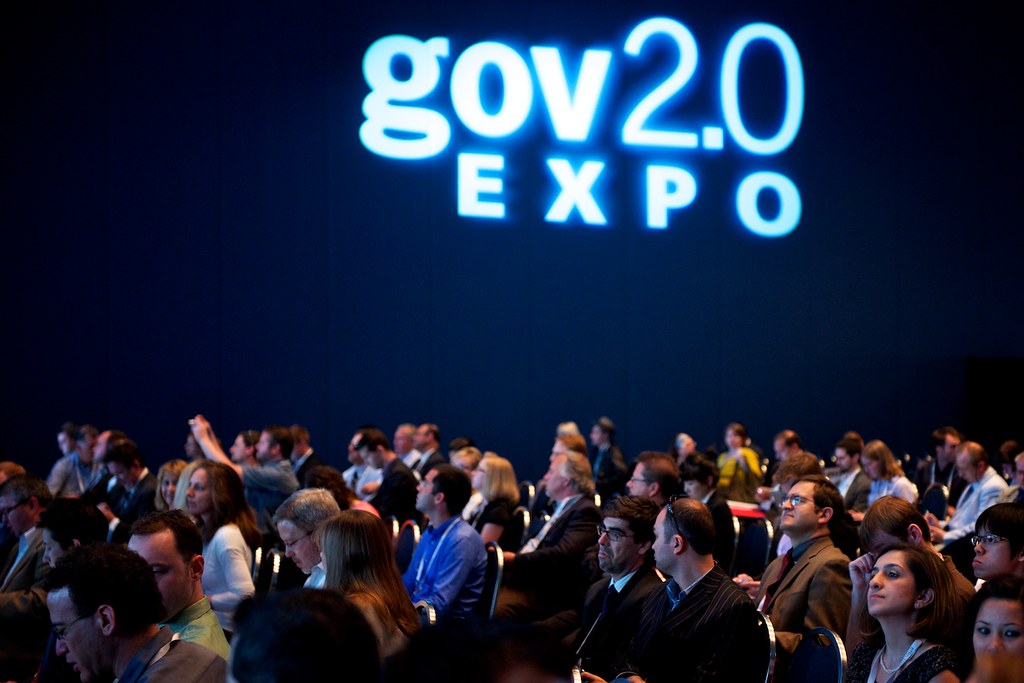
Last week, I participated in Tim O’Reilly’s Gov 2.0 Expo held here in Washington, DC and I was honored to be a member of the Program Committee for this event as well as last year’s Expo Showcase and Summit.  With each and every one of these events, I always looking forward to meeting and learning from the Gov 2.0 rockstars – Linda Cureton, Chris Rasmussen, Steve Ressler, Clay Johnson, Macon Phillips, Mary Davie, and so many others – people who have helped pave the way for conferences like this. Take a look at this speaker list and take a guess at where this movement would be without them. I think I get smarter just through osmosis when I’m talking with these folks! Kudos to Tim, Laurel, Mark, Suzanne, Jessica, Alex, and the rest of the O’Reilly team for pulling together another great event.

I'm pretty sure this image is going to be on everyone's Gov 2.0 Expo posts

As I did last year following the Summit, instead of doing a summary post of all that was Gov 2.0 Expo 2010 (I couldn’t possibly do any better than Alex’s fantastic wrap-up post here anyway), I’ll take a more focused view and discuss one issue that really struck me.

Last year, I said I wanted to hear more about the processes behind the success stories.  To learn more about the failures in Gov 2.0.  I think we started to accomplish that this year – the many panel presentations and workshops seemed more conversational and attendees seemed more willing to ask questions.  I heard a lot more discussion about how the speakers handled difficult situations, how they worked with legal, and how they got senior leadership buy-in. While there’s still a need to hear more about the failures of Gov 2.0, I think those discussions are probably more likely to occur in the hallways than on the stage.

What really got my attention as I sat listening to visionary leaders like Todd Park, Linda Cureton, and Jeffrey Sorenson was this post by Robert Shedd – just who makes these people successful?  That’s the question that I started to get more and more curious about as the Expo continued. Who are the people behind these leaders?  Who are the people back at the office making sure the social networks are growing?  Who are the people responsible for implementing these grand programs?  Who are the people telling these leaders they’re wrong?  Who are the people coming up with all of these ideas?  That’s why I loved when Alex Ross told the story of Katie Dowd, Katie Stanton, and Caitlin Klevorick at the State Department (fast forward to the 2:00 minute mark of this clip) who came up with the idea for the Haiti Red Cross text messaging campaign. While Alec was the one speaking and getting the credit, he realized that it wasn’t about him or his ideas – it was about the people actually making these things happen.

As Shedd mentions in his post,

“In much the same way as you need to train yourself to recognize the market ‘pains’ that product opportunities create, you need to train yourself to note who you work best with, what personalities are most compatible.”

For me, any and all success that I or my firm has had can be traced back to the work of my team.  Sure, I may be the one on the stage, but I’m generally not the one on the ground day after day working with the client.  I’m writing blogs – they’re trying to explain Twitter to a three-star general.  I’m speaking at events – they’re trying to do more work while still staying under budget.  That’s why I want to take this opportunity to say thank you to some of the other Booz Allen folks you may have met at the Expo, but whom you might not know well…yet.

  • Thank you Jacque Brown for never being afraid to tell me when I’m wrong or when I’m being a real dumbass.
  • Thank you Matt Bado for always stepping up to handle things when I’m out of the office
  • Thank you Michael Dumlao for being the right side of my brain – everything you create always looks fantastic
  • Thank you Tim Lisko for being the social media conservative who also understands the benefits
  • Thank you Grant McLaughlin for always believing in me and providing me the top cover that I need to make things happen, even when it sometimes puts you in a tough spot
  • Thank you Walton Smith for always being open and collaborative, regardless of any internal politics that may exist
  • Thank you Tracy Johnson for being able to take some of my crazy abstract ideas and figuring out ways to make them work
  • Thank you to the many many others back at my company who have helped turn an idea into a true program

Please take this opportunity to go back to your blog and write a post on who makes you successful.  Highlight the work of someone who works with you, someone who has helped get you to where you are today.  Give them the attention and recognition that they deserve and leave a comment here with a link to your post.  Who has helped you turn an idea into a successful program?

*Photo courtesy of James Duncan

Continue reading...

Will I See You at the Gov 2.0 Expo?


Download our Gov 2.0 Capabilities Brochure

I’ll be at the Gov 2.0 Expo this week and I’m hoping that I’ll see you either there, or at one of the happy hours/tweet-ups that will surely be occurring.  If you’re the least bit interested in social media or the future of our government, I’d highly encourage you to register and come down for at least a few sessions. There are more than a hundred GREAT sessions taking place, but if you can’t get to all of them, consider participating in one of these ten hidden gems too.

If you are able to make it down to the Convention Center, make sure you stop by the Booz Allen booth on the Expo floor and say hello to me or to one of the many members of our team who will be attending the Expo as well.  Booz Allen is proud to be one of the Platinum Sponsors and I’m one of the members of the Program Committee – needless to say, everyone here at my firm believes very strongly in the principles of Gov 2.0 and has for some time now.  From our work with the Military Health System to U.S. Pacific Command’s All-Partners Access Network (APAN), Booz Allen has long advocated the principles of transparency, participation, and collaboration with all of our clients.

Grant McLaughlin and Walton Smith, two of our Principals, recently gave a short preview of what they will be discussing at the “Innovations in Gov 2.0” session on Wednesday.

Here are some of the projects we’ll be highlighting over the next three days:

Military Health System (MHS)

To strengthen relationships with its nine million beneficiaries and numerous stakeholder communities, the Department of Defense Military Health System (MHS) partnered with Booz Allen Hamilton to leverage social media (MHS Social Media Hub) to help MHS address service members’ healthcare concerns, collaborate with stakeholders, support combat operations, and enhance its capacity to reach and influence diverse audiences.  If you’re interested in learning more about our work with MHS, find Don Jones at the Expo or read more here.

U.S. Pacific Command All-Partners Access Network (APAN)

Booz Allen is working with PACOM to create APAN, a secure platform to foster collaboration and communication between government agencies, international partners, and non-government agencies.  The U.S. Pacifc Command (PACOM) operates in the Pacifc Rim with numerous actors (military, civilian, government, non-government) who must all cooperate in crisis and disaster response situations, joint exercises with foreign militaries and other events where open information flow is essential to success.  APAN has file sharing applications, wikis, blogs and calendaring tools to coordinate schedules. The system also supports mobile applications and integrates public social media sites, such as Twitter and Facebook, as well as sophisticated geospatial systems, such as Open Street, to create detailed maps of damaged areas. The system is designed to handle extremely secure communications, while also interacting with  the general public and disaster relief workers  and organizations. If you’re interested in learning more about APAN, talk to Walton Smith at the Expo or learn more on Bill Ives’ blog here.

U.S. Navy Chief of Information Office (CHINFO)

Booz Allen partnered with the Navy’s Emerging Media Directorate within CHINFO to develop a strategy for providing guidance to all Navy Commands on how to successfully integrate social media into their Public Affairs activities. We worked closely with the Navy Office of the Chief of Information (CHINFO) Emerging Media & Integration Team to develop a plan to:

  • Integrate and optimize CHINFO’s use of social media as engagement tactic
  • Achieve greater understanding of the use of social media among 300+ Public Affairs Officers
  • Foster and align use of social media by commands and commanders (400,000+ Active Duty & Reserve personnel)
  • Achieve recognition for the Navy as a military/government leader in social media

To learn more about what the Navy’s doing with social media, check out the Navy’s social media directory and SlideShare account. Or find Commander Scott McIlnay or Tracy Johnson at the Expo.

DHS First Responders Communities of Practice

Booz Allen is working with the DHS Science & Technology Directorate to build and manage the DHS First Responders Community of Practice – a platform that serves the nation’s 2.8 million emergency first responders (e.g., fire, emergency management, law enforcement). Launched in December 2009, the First Responders CoP is designed to decrease duplicate efforts across the various first responder communities and disciplines.  Users can connect with other first responders, create and join communities, create, share and edit documents, blogs, and discussions.  In addition, users can add “expertise tags” which allow them to easily find someone with specific expertise and view and connect to other users with similar expertise.

To learn more, make sure you attend Jose Vazquez’s presentation on Tuesday evening, or find Alexis Fabbri or Walton Smith on the Expo floor.

Meet our People

Stop by booth 309 (I think) to talk with our experts on privacy, cybersecurity, social media, Enterprise 2.0, identity and more.  Make sure that you follow all of our Booz Allen attendees on Twitter too!

Want to Work for Booz Allen?

Make sure you stop by our booth and find Annie Chae (@anniechae), one of our lead recruiters and one of my favorite people.  She’ll be able to answer all your questions about working for us.

Even if you have no interest in the work that we’re doing, make sure check out the full program schedule and try to come by and get to know some of the people who are driving this transformation in the way our government operates.

Continue reading...