Tag Archives: social media

You Become What You Measure

As we kick off 2014, we’re awash in PR trends and predictions. Here are six trends to watch in 2014. Here are 20 more. And another 10 more. But let’s look a little further ahead. And let’s start by looking at the implementation of standardized testing in our nation’s schools, the performance reviews of police officers, and the recent financial crisis.

These three seemingly incongruous industries are actually suffering from a situation that will soon face the PR industry as well. They’re all suffering from quant overshoot. It’s one of the four stages of the rise of the quants as described by Felix Salmon in his excellent “Numbed by Numbers: Why Quants Don’t Know Everything” article in January’s WIRED. In the overshoot stage, people stop thinking like people and start thinking like machines.

“On a managerial level, once the quants come into an industry and disrupt it, they often don’t know when to stop. They tend not to have decades of institutional knowledge about the field in which they have found themselves. And once they’re empowered, quants tend to create systems that favor something pretty close to cheating. As soon as managers pick a numerical metric as a way to measure whether they’re achieving their desired outcome, everybody starts maximizing that metrics rather than doing the rest of their job – just as Campbell’s law predicts.”

Salmon points to police departments that judge effectiveness on arrests and schools that focus their efforts on increasing standardized test scores as examples of the unintended consequences of yielding decision-making to quantitative data. What scared me as I read this article is that I see marketing and PR taking the exact same road. Quantitative analysis of big data is thoroughly disrupting our industry – everything we do now can be measured, analyzed and optimized. We use tools like Sysomos and Radian6 to track millions of social media posts. We use sophisticated algorithms to measure the specific level of influence people have among their friends. We use social network analysis to determine how messages flow from one person to another. We can even use cookies and web analytics to optimize the actual content that you see when you visit a site. And we’re only at the beginning. PR is going to get more and more data-driven, allowing us to become more efficient than we’ve ever been.

And that’s what scares me.

Image courtesy of Flickr user themadlolscientist

PR has always been more art than science and for good reason

Just because we can measure and optimize something doesn’t always mean we should. We’re abdicating our relationships and conversations in favor of statistical models and algorithms. Data has undoubtedly made PR more efficient and effective, but I worry that we don’t know when to stop. We’ve already stopped using Twitter to actually talk with people. Instead, we analyze the length, content, and timing of them to optimize their reach and shares. I’ve already seen instances where relationship-building Tweets like “Great article @reporterX – will be sharing that one around the office!” are shunned because they won’t impact engagement numbers. We’ve resorted to sharing “inspirational quotes” not because they do anything for our brand, but because they’ll get us more likes. We ignore reporters and bloggers who don’t measure up to some arbitrary influencer score. Where does it stop? Will it stop? Can we stop? 

PR can and should serve a critical role in the integrated marketing mix. PR should be the ones who help mitigate the impact of the overshoot stage and quickly move organizations into stage four – the synthesis stage, the stage where quantitative data is married with old school subjective experience. PR professionals should be the ones who help bridge this gap, not fall victim to the same over-reliance on data that doomed our financial systems or our schools.

In 2014, let’s make a concerted effort to not be a slave to data. To not let machines and spreadsheets dictate our conversations and relationships. To remember that public relations is still more art than science. To use data to enhance our decision-making, not make decisions for us. Let’s recognize that no matter how advanced the data gets, computers and algorithms will never be able to replace actual human interaction. Hopefully, PR professionals will still be able to do that in between analyzing their graphs and spreadsheets. 

*Image courtesy of Flickr user themadlolscientist

Continue reading...

Before You Commemorate the Anniversary of Hurricane Sandy, Ask Yourself These 5 Questions

Comments Off on Before You Commemorate the Anniversary of Hurricane Sandy, Ask Yourself These 5 Questions

October 28, 2013 satellite image of Hurricane Sandy taken from a NASA satellite

October 28, 2013 satellite image of Hurricane Sandy taken from a NASA satellite

Next week is the anniversary of Hurricane Sandy. With all the hype around real-time marketing and newsjacking, community managers may find themselves compelled—by a client or colleague—to contribute to this news-driven conversation in social media.

When brands do this, it can come across as forced, at best, or offensive, at worst. The line between appropriate and inappropriate is a thin one, best evidenced by recaps of brands trying to commemorate 9/11 this year.

Real-time marketing requires a deft hand, balancing the benefits of participating in conversations your customers are having with the potential damage done by content that’s more concerned with the brand than with its audience.

More often than not, saying nothing is the best move. If you feel the need for your brand to say something about a news-driven event, head over to PRDaily to read this post written by a couple of my team members, Scott Smith (@ourmaninchicago) and Jeana Anderson (@jeanaanderson).

Continue reading...

Content Marketing That Wins: Making Brands, Readers AND Google Happy

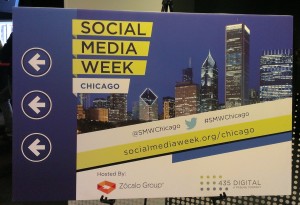
Social Media Week Chicago Scott SmithNick Papagiannis and I had the opportunity to kick off Social Media Week Chicago with a presentation titled “Content Marketing That Wins: Making Brands, Readers, AND Google Happy” to a packed house at Morningstar in Chicago. If you missed it, we’ve created a Storify for the event hashtag and embedded the livestream and presentation below. Thank you to everyone who made it out and/or participated virtually – I’m really looking forward to continuing this conversation because content marketing has a lot of potential…if we don’t screw it up first.

Seemingly everywhere you look, there’s content marketing tips, tricks, and hacks. During Social Media Week Chicago alone, there are at least 16 sessions on the topic. But remember when content marketing consisted of publishing a blog post a week? Now, with consumers constantly bombarded with news and content via an ever-expanding array of media and social platforms, brands have been pressed into a “content arms race” that has them posting to blogs, Twitter, Facebook, Google+, Vine, Instagram, Pinterest, etc. every single day. They’re even using automated content creation and curation platforms to feed the beast and stay at the top of search rankings. But how much of this activity actually serves a brand’s business goals? Or truly engages consumers?

Just like the hammer in search of a nail, marketers are spending more and more of their time and energy reducing every conversation, article, and photo to a piece of data, all in an effort to maximize their ROI and deliver the most eyeballs at the lowest price. Instead of a world where brands are creating content that solves problems, adds value, or creates deeper relationships with customers, we are perilously close to a world where more simply equals better.

Here’s the thing though – we don’t have to do things this way. We have the data and the tools to scale actual conversations and relationships. We have the tools to talk with people directly now. We have the ability to precisely target only those customers who will care about the content. Content marketing gives us the opportunity to rethink marketing – let’s stop trying to game the system and optimize every piece of content and instead think about how to best optimize our relationships with our customers.

The big takeaway from our presentation is that content should be beneficial to your customer, reflective of your brand, and optimized for Google, in that order.

If you don’t want to watch the whole recording, you can check out the slides here.

Continue reading...

A Partial Reading List for PR Students

Students in class

Image courtesy of Flickr user vasta

College students across the country are in the midst of moving back to college for the fall semester. In between partying, traveling, club activities, sports, Greek commitments, and jobs, some will also be attending classes. Those lucky enough to be taking a PR class should be looking forward to discussions about an industry that’s being turned upside down by technology. You’ll learn from brands who have made mistakes. You’ll learn from brands who have succeeded. You’ll learn about laws governing social media. You’ll learn how to use social media for yourself. You’ll learn how social media is being integrated into areas beyond just marketing and PR. And you’ll also probably learn plenty of tips, tricks, hacks, and shortcuts, all in the name of efficiency, scalability, or optimization.

Do me a favor this semester. If your PR professor starts sounding like a Buzzfeed article sharing all kinds of tips and tricks advocating how to get the most fans, followers, retweets, likes, or views, tell them that you want to stop taking the easy way out.

If the books and blogs you’re reading for your PR or marketing class start to sound too much like late night infomercials extolling get-rich quick schemes, here’s are some resources I’d recommend sharing with your professor and classmates this semester.

  • The Cluetrain Manifesto  – I’ve talked about this book a lot for a reason. It’s one of the first books I read when I first started in social media back in 2006. It’s as relevant now and it was then, and is a great foundation for any PR or marketing professional.
  • Humanize – Maddie Grant and Jamie Notter provide a fantastic how-to on making organizations not just seem more human, but actually function in a more human way. It tackles the hard people side of change that most organizations seem to think is taken care of with a memo or a training class.
  • Marketing in the Round – Marketing and PR are no longer the only organizational touchpoints with the public. Customer service, marketing, PR, operations, executive leadership – the public doesn’t care about your org chart. Successful marketing is integrated marketing.
  • Social Media Strategist – There’s a difference between being the millenial who is handed the keys to an organization’s social media accounts and being a business leader who uses social media to change an organization. FYI – the latter is who you want to be. Read this book and learn how to do that.
  • Spin Sucks – One of my favorite blogs for years – Gini and her team are whip-smart PR practitioners who understand there’s no technology replacement for good PR.
  • The BrandBuilder Blog – You’ll hear people whine and complain about the difficulty in measuring the ROI of social media ROI. Don’t be one of those people. Read Olivier’s blog and book.
  • Shel Holtz – I’ve been a fan for more than five years. Shel’s one of the smartest PR practitioners you’ll ever meet.
  • Shelly Kramer – I’ve just started reading Shelly’s blog over the last year or so, but I love her matter-of-fact approach to marketing and conversational tone.
  • Doug Haslam – I love Doug’s sense of humor and willingness to call BS on marketing “best practices” that have pervaded this industry.
  • Rick Rice – Rick and I share very similar views and frustrations with the PR industry – the PR practitioner as consultant and adviser, not as publicity hound.
  • Geoff Livingston – I’ve known for a long time too and have always admired his commitment to his beliefs and his broad knowledge of everything from marketing to branding to PR to social media.
  • Jeremiah Owyang – one of the smartest people I’ve ever had the pleasure of meeting in this industry. His blog, presentations, and dozens of research studies have been immensely helpful to my career.

There are a lot of other great resources out there (please share them in the comments), but sadly, even more that will lead you down a path full of shortcuts and hacks.

This semester, avoid taking the easy way out and remember that establishing and maintaining relationships are supposed to be hard. As any college student will tell you, creating and maintaining any relationship isn’t easy. It’s not easy in our personal lives, and it’s certainly not easy in our professional lives. It takes time and commitment. There’s small talk, awkward silences, disagreements, reconciliations, and long conversations. This is the case whether it’s girlfriends, boyfriends, roommates, customers, reporters, or employees.

Through all the tips, tricks, hacks, and shortcuts, remember that at the end of the day, successful PR really comes down to basic interpersonal communications. Listen more than you talk. Empathize with the other person. Add more value than you take. Say please and thank you. Be honest. Apologize when you’re wrong. Keep the basics as your foundation and you’ll do just fine this year and into the future.

Continue reading...