
Tag Archives: sports

Sports Can Learn a Few Things From Gov 2.0

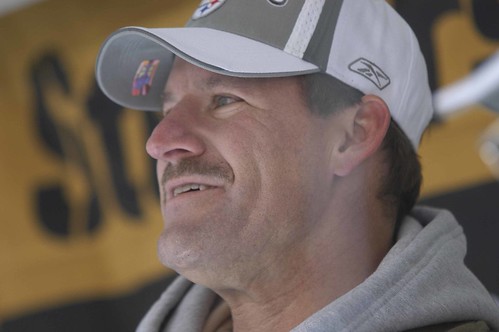
steelers 028

“Dear [fill in your favorite sports team],

You may think of me as a fan or as a ticket-holder now, but if you give me the chance, I’d gladly be a marketing specialist, brand ambassador, web developer, community organizer and data cruncher.  Oh yeah – I’ll also do all these things for free if you’d just ask.”

Sincerely,
Joe Sports Fan

In a recent post, I discussed some of the similarities that I saw between the government’s experiences with social media and the challenges that professional sports teams are facing in diving into the world of social media.  As I thought about it some more, I figured that if these teams are facing many of the same challenges that government agency does, they can probably also take advantage of some of the same strategies that government agencies have deployed too.

As a sports fan and a government consultant, here are some of the government’s social media initiatives that I’d like to see cross over to the sports industry:

  • A closed Intranet for all of the teams in a particular league. Imagine an Intelink-like service where every MLB team’s communications staff could log in and share information with each other. There’s obviously some very heated competition among the teams, but there’s also a lot of camaraderie that already exists.  I’m not suggesting that general managers get on here and blog about player transactions or scouting strategies, but they could definitely share their ideas for promotions and community events, best practices for engaging with season ticket holders, or how they’re using social media – things that help the entire league.  With the right education and change management support, an Intranet like this could help raise the quality and consistency of communications across the league, thereby selling more tickets and making more money for everyone.
  • An Apps for Baseball (or Football, Hockey, etc.) contest. Similar to the Apps for America contests made possible by sites like data.gov, why can’t one of the sports leagues partner with the Elias Sports Bureau to open up the MASSIVE amount of sports statistics on an accessible platform and then engage the sports-loving public to create web-based, iPhone, JAVA, and other applications?
  • A Recovery.gov for a sports team –  I would love to see my favorite team open up their books to the public and say, “here’s our payroll, our ticket revenue, our marketing budget, our merchandising revenue, our property taxes – here’s everything that comes in and goes out, and oh, by the way, after all that, we still lost $3M.”  There’s a lot of mystery about what it costs to actually run a team, how much of the money is public vs. private funds, and why teams that are still shelling out millions of dollars for free agents are saying they’re losing millions of dollar per year.  The fans want answers to these questions and they want to feel as though they’re partners in the future success of the team. Open up your books and show the fans that there’s nothing to hide (unless, that is, you have something to hide). The Green Bay Packers are probably the sports industry’s leaders in this area, being a publicly-owned team, but just because other teams aren’t legally obligated to release their financials doesn’t mean they shouldn’t.
  • More leadership accessibility. I want to see more Mark Cubans out there engaging with their fans.  Players like Chris Cooley and Chad Ochocinco and league officials like Brian McCarthy and Mike DiLorenzo have done a tremendous job of using social media to reach out to their fans and engage in real conversations, creating fan loyalty and ownership in the player, league, and/or franchise.  Just as leaders from across the government are getting on Twitter and blogging, why aren’t more team owners, general managers, and other front office types using these tools to talk with their fans NOT market to their fans.

There are real opportunities for the sports industry to leverage some of these same concepts and tactics that are now driving Government 2.0. Teams and leagues can use these ideas to do more than just sell more tickets, but to create a community of interested, informed, and passionate partners, developers, and brand ambassadors.  Who would have thought that an NFL or MLB team could learn a few things about communications, agility, transparency and authenticity from the federal government?

Continue reading...

Taking Gov 2.0 to the Ballpark

Sports franchises face many of the same challenges in implementing social media as government agencies do

Sports franchises face many of the same challenges in implementing social media as government agencies do

I recently had the honor to join Frank Gruber, Shashi Bellamkonda, Mike Tunison, Gayle Weiswasser, and several other social media and microtargeting professionals (sorry I didn’t get everyone’s Twitter names!) to meet with Stan Kasten, President of the Washington Nationals, and several other team executives to discuss how sports teams can better use social media to increase awareness of the team’s activities both on and off the field, better engage with their existing fans and potential fans, create more fans, generate more positive media coverage, and ultimately, help sell more tickets and build a better baseball team. We were all brought together to brainstorm what the Nationals were doing well, what they could be doing better, and what they hadn’t thought of yet. If you aren’t familiar with my background, this was a dream come true for me – bringing together my love for social media and communications and my love of sports. I’ve always been a huge sports fan and used to work in public relations for a minor league hockey team, so I was extremely excited for this opportunity.

However, despite sitting in a conference room at one of the nicest ballparks in the Majors talking with some of the league’s most powerful baseball people, I couldn’t help but feel like I was again sitting in a nondescript cubicle in some office park talking with the Branch Director for a government agency.  From the opening introduction – “you have to understand, we’re dealing with a very unique situation that’s different from your typical organization,” to the challenges they face, “we have to work under Major League Baseball’s strict communications policies so we’re really limited in what we can just go and do,” – the similarities between sports teams’ use of social media and the government’s use of social media really struck a chord with me.

  • Both are trying to reach a very broad and very diverse group of people that crosses all demographics
  • Both operate under a broader entity that creates and enforces the policies and guidelines for communications, including the use of social media
  • Both are primarily operated by conservative and traditional leaders who rely on the command and control communications model
  • Both deal with VERY passionate and very partisan (both positively and negatively) stakeholders
  • Both typically have relatively small communications budgets
  • Both are usually so concerned with the overall mission that communications doesn’t receive the attention or commitment it requires
  • Both deal with media who crave all the information they can possibly get
  • Both operate in a system where they should communicate with other organizations with a similar mission, but instead find themselves in competition with each other
  • Both are determining the best way to educate employees (or players) outside of the traditional communications function who are actively using social media to communicate directly with the public

While there are most definitely some differences, when it comes to social media, the fact remains that we had the exact same conversation the other night with the Nationals that I’ve had dozens of other times with government agencies. Neither the challenges nor the solutions are all that different. During the meeting, I mentioned some of these similarities  – if the government can use social media to do share classified information across Agency firewalls using Intellipedia and the Air Force can allow their airmen to engage directly with the public via social media, there’s no reason similar strategies and tactics can’t be applied to a sports franchise. Sports teams have too much gain from social media and too much to lose by not engaging – it’s a no-brainer to me.

The sports community is a very insulated community – teams and leagues generally look inside the sports industry to hire their communications and marketing professionals, but maybe they should take a look at the Government 2.0 industry to find that next pool of communications talent and innovation.  After all, we’re dealing with many of the same issues they are.

Continue reading...

What’s Going to be Your Social Media Legacy?

Image courtesy of Flickr user Douglas Staas

Image courtesy of Flickr user Douglas Staas

As I sat down the other night to write another blog posting for my company’s internal social media platform, I thought to myself what would happen if I were to stop.  Stop blogging.  Stop Tweeting.  Stop evangelizing.  Stop everything related to social media.  What would happen if I took a job in another industry where social media wasn’t a key component of the job? What would happen to all of the blog posts that I’ve done?  What would happen to all of the people on my social media team at Booz Allen?  What would happen to the social media practice there?

What’s my legacy if I were to leave my company?  Specifically, what’s my social media legacy?  People tend to think that their value to their organization is directly proportional to the amount of destruction that would occur in their absence.  Not only is this not true, it’s the exact opposite of what you should want your legacy to be.  Indulge me with the following analogy – when Bill Cowher retired from the Pittsburgh Steelers after an 8-8 season in 2007, he was widely considered one of the best coaches in the league.  In Pittsburgh, his retirement was met with loads of “the sky is falling” criticism.  Cowher was one of the best coaches in the league – what would the Steelers do without him?  When Mike Tomlin took over as the new Steelers coach, he retained a majority of the coaching staff.  Without Cowher, the team didn’t fall apart, the team didn’t collapse.  In fact, the team got better – they went 10-6 in Tomlin’s first year.  Compare this to Lloyd Carr and who retired from the University of Michigan after going 9-4 in 2007.  Rich Rodriguez took over and in his first season, is 3-7 and on his way to leading the Wolverines to one of the worst records in their history.  Who would you say was the more valuable coach – the one who created an organization that could be successful even without him or the one who created an organization that fell apart without him?  Do you look at Bill Cowher as any less of a coach because the team didn’t implode without him?

This concept doesn’t just apply to sports teams though.  Applied to the government, this is akin to those leaders who create new initiatives in their last year of office because they want to leave a legacy.  How many of these efforts continue after they’re gone?  Have they created something that’s going to continue to benefit the organization even after they’re gone, or something that’s going to have a short-term benefit, but will ultimately fail without someone driving it?  Take a look at something like Intellipedia which was founded by Don Burke and Sean Dennehy more than two years ago.  They’ve fostered a environment in which dozens of collaboration leaders from across the Intelligence Community have emerged to not only sustain the Intellipedia vision, but also to build upon it.  What started out as just a wiki now includes social bookmarking, social networking, blogs, and most importantly, a culture of collaboration that will continue even if one or two pieces is taken away.

I am openly challenging myself as well as every other social media evangelist who is reading this post to be like Bill Cowher.  Have you helped develop other leaders who are capable of taking the reins if you’re gone?  Have you shared your skills and knowledge with others throughout your organization who will help ensure the success of your efforts after you leave?  Have you helped create a successful organization full of others like you?  What’s going to be your social media legacy?

Continue reading...